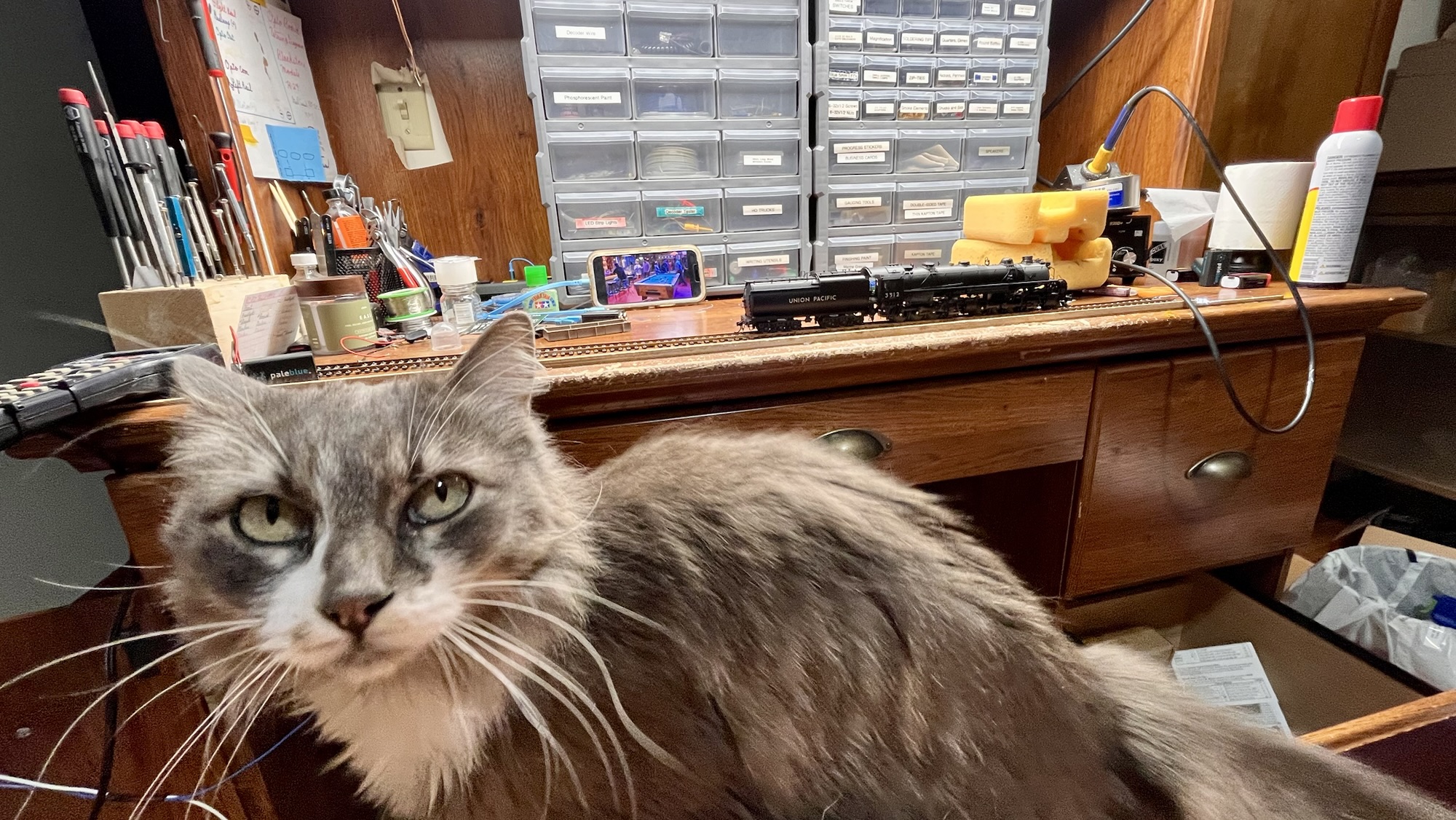
For many railroad enthusiasts, the Union Pacific Big Boy represents the pinnacle of American steam locomotive design. Its sheer size, remarkable power, and modern-day return to service have made it a railroading icon. Yet the Big Boy did not appear in isolation. It was the culmination of more than two decades of engineering development, during which Union Pacific continually sought to move heavier freight trains over the steep grades of the American West with greater speed, efficiency, and reliability.
Beginning with the rugged Bull Moose in 1918, the innovative 9000 class in 1926, the versatile Challenger in 1936, and finally the legendary Big Boy in 1941, Union Pacific refined the art of heavy freight steam power into what many historians consider the highest achievement of the American steam era.
The Problem
Unlike many eastern railroads, Union Pacific crossed some of the most demanding terrain in the continental United States. Long grades across Wyoming’s Sherman Hill and Utah’s Wasatch Mountains challenged locomotives to haul increasingly heavy freight trains over difficult mountain districts while maintaining efficient schedules.
Each generation of locomotive was another attempt to solve the same fundamental question: how can increasingly heavier trains move faster over the mountains without increasing expense?
The answer evolved dramatically between 1918 and 1944.
The Bull Moose, The Greatgrandparent (1918–1924)
The nickname “Bull Moose” was affectionately given by Union Pacific crews to the railroad’s fleet of 2-8-8-0 articulated Mallet locomotives. Between 1918 and 1924, the American Locomotive Company (ALCO) built seventy-five examples for Union Pacific.
Designed specifically for mountain freight service, these locomotives possessed tremendous pulling power but sacrificed speed. Their primary purpose was to haul long freight trains over steep grades where brute force mattered far more than velocity.
Compound Articulation
The Bull Moose was originally built as a compound Mallet.
Instead of sending fresh boiler steam to all four cylinders simultaneously, steam first entered two smaller high-pressure cylinders before exhausting into two larger low-pressure cylinders. This arrangement extracted additional energy from the steam and improved fuel economy during slow-speed operation.
While efficient, compound operation made the locomotives mechanically complex and somewhat sluggish when accelerating. Acceleration may be only one part of a train’s trip, but it’s a very important part of time spent traveling. “Time is money” to all railroads, be they commercial freight, commercial passenger, or leisurely excursion railroads.
Rebuilding the Bull Moose
Beginning in the late 1930s, Union Pacific modernized much of the fleet.
Major improvements included:
- Conversion from compound to simple-expansion cylinders
- Larger 59-inch driving wheels
- Feedwater heaters
- Mechanical refinements throughout the locomotive
- Conversion of many locomotives from coal to oil firing
- Improved, more efficient application of power
These rebuilt locomotives’ significant upgrade in power application and efficiency made them valuable mountain freight engines through the late nineteen forties.
The “Nines” 9000 Class, A Completely Different Solution (1926–1930)
Rather than constructing an even larger articulated locomotive, Union Pacific engineers pursued a radically different approach known today simply as “the Nines”.
Between 1926 and 1930, ALCO produced eighty-eight 4-12-2 locomotives that remain the only largely successful production three-cylinder steam locomotives built for regular service in North America.
A Worthwhile Note: The 9000s were the most famous example of large, three-cylinder steam locomotives, but they were not the first. Their immediate predecessors are the ten 4-10-2 “Overland” 8000s built in 1925. The Overlands were experimental prototypes of a concept that paved the way for the Nines. They hauled heavy freight trains over the famous Overland Route in addition to the Overland Limited passenger train. The Overlands were overshadowed by the Nines relatively soon, having a service date range of about seventeen years before being converted to two-cylinder operation.
Three Cylinders Instead of Four
Unlike virtually every other large American steam locomotive, the 9000 included an additional inside cylinder located between the locomotive’s frames.
This third cylinder drove the second driving axle, producing smoother power delivery and reducing the stress placed upon the outside cylinders.
The design proved remarkably successful.
Although the Nines generated slightly less starting tractive effort than the rebuilt Bull Moose, it hauled nearly the same tonnage while maintaining speeds approaching 50 mph. Faster trains meant increased capacity because locomotives spent less time occupying valuable main-line track.
The trade-off was flexibility. With twelve coupled driving wheels mounted in a rigid frame, the Nines required exceptionally well-maintained track and generous curve radii.
The Challenger (1936–1944)
Combining Speed with Articulation
The Challenger represented one of the greatest advances in steam locomotive engineering in its time.
Instead of choosing between the flexibility of the Bull Moose and the speed of the Nines, Union Pacific engineers combined both strengths into a single locomotive.
The 4-6-6-4 Challenger was designed from the beginning as a simple articulated locomotive, eliminating the complicated compound steam system used by earlier Mallets.
This reduced maintenance while greatly improving high-speed performance.
A Freight Locomotive That Could Run Fast
Equipped with 69-inch drivers and operating at 255 pounds per square inch of boiler pressure, the Challenger comfortably hauled heavy freight between 50 and 70 mph.
For an articulated locomotive of its size, this was extraordinary.
Union Pacific eventually owned 105 Challengers, more than any railroad ever operated, making the design one of the most successful articulated freight locomotives in history.
The Big Boy (1941–1944)
The Mightiest Steam Freight Locomotive in the West
By the early 1940s, freight traffic continued to increase.
Union Pacific wanted a locomotive capable of hauling 3,600-ton freight trains over the Wasatch Mountains without helper locomotives.
ALCO answered with the now-famous 4-8-8-4 Big Boy.
Although visually similar to the Challenger, nearly every major component was enlarged.
Boiler pressure increased to 300 psi.
The locomotive weighed approximately 772,000 pounds by itself and more than 1.2 million pounds when coupled to its tender.
Starting tractive effort reached an astounding 135,375 pounds.
Despite its enormous size, the Big Boy remained surprisingly fast. In regular freight service it commonly operated at speeds between 45 and 70 mph, with credible reports suggesting somewhat higher speeds under exceptional circumstances.
Only twenty-five Big Boys were built, yet eight survive today. No. 4014 currently holds the distinction of being the world’s largest operating steam locomotive.
Union Pacific Heavy Freight Steam Chronology
1918: The first Bull Moose enters service, introducing large articulated freight power to Union Pacific.
1924: Construction of the Bull Moose fleet concludes.
1926: The first Nine-class locomotive is delivered, becoming the largest successful rigid-frame steam locomotive built in North America.
1930: Construction of the Nines concludes.
Late 1930s: Most Bull Moose are rebuilt from compound to simple articulated locomotives, receiving larger drivers and numerous mechanical improvements.
1936: The Challenger enters service and demonstrates that articulated locomotives can combine flexibility with sustained high-speed freight operation.
1941: The first Big Boy is delivered.
1944: Construction of both the Challenger and Big Boy concludes.
1947: Retirement of the Bull Moose fleet begins.
1953-1956: The Challenger and Nine fleets are gradually retired as diesel-electric locomotives assume their duties.
1959: The final Big Boys leave regular service.
11 August, 2016: Restoration of Big Boy 4014 begins.
1 May, 2019: The locomotive moved under its own steam for the first time since 1959 during test runs in Cheyenne.
4 May, 2019: Union Pacific formally unveiled the restored locomotive during a public ceremony in Cheyenne.
9 May, 2019: No. 4014 departed on its first public excursion, helping commemorate the 150th anniversary of the completion of the First Transcontinental Railroad at Promontory Summit, Utah. This is generally regarded as its official return to service.
Four Different Engineering Philosophies
One of the most fascinating aspects of these locomotives is that each solved the same operating problem in a different way.
The Bull Moose emphasized maximum pulling power. Efficiency and low-speed tractive effort were paramount, making it ideal for mountain grades but relatively slow.
The 9000 class pursued speed through an immense rigid frame and an innovative three-cylinder arrangement. It moved similar freight tonnage more quickly, increasing the railroad’s capacity without requiring additional track.
The Challenger united articulation with speed. It could negotiate mountain curves while hauling heavy freight at speeds previously reserved for rigid-frame locomotives.
The Big Boy refined the Challenger’s concept into its ultimate form. Rather than chasing higher top speeds, it focused on moving heavier trains over mountain grades without helper locomotives, pushing reciprocating steam technology to its practical limits.
Did You Know?
The Bull Moose Wasn’t Originally Called a Class
“Bull Moose” was a railroad nickname coined by Union Pacific crews rather than an official builder’s designation.
The 9000 Was Unique
The 9000 class remains the only successful production three-cylinder steam locomotive built for regular service in North America.
The Challenger Was Designed for Speed
Unlike earlier Mallets, the Challenger was designed from the outset as a high-speed articulated locomotive rather than being adapted from a slower freight design.
Eight Big Boys Survive
Of the twenty-five Big Boys constructed, eight escaped the scrapyard—an unusually high survival rate for large steam locomotives.
Legacy
Viewed together, these four locomotive classes illustrate one of the most remarkable engineering progressions in railroad history.
In just twenty-three years, Union Pacific advanced from the slow but immensely powerful Bull Moose to the Big Boy, a locomotive capable of hauling enormous freight trains over mountain grades at sustained main-line speeds.
Each generation built directly upon the lessons learned from its predecessor. The Bull Moose proved the value of articulation with heavy freight over mountainous terrain. The 9000 demonstrated that immense freight locomotives could also be fast. The Challenger successfully combined those ideas into one versatile design. Finally, the Big Boy refined that formula into what many historians consider the ultimate expression of American steam locomotive engineering.
Today, although only the Big Boy survives in significant numbers, the legacy of every one of these locomotive classes lives on. Together they transformed freight transportation across the American West and helped define the final golden age of steam.


